BUSINESS

Geotechnical analysis

Vacuum consolidation FE, coupled analysis of temporary works, SSI seismic analysis, 3D-MODFLOW

Overview

Numerical analysis and stability review as design and construction evidence

Vacuum consolidation analysis

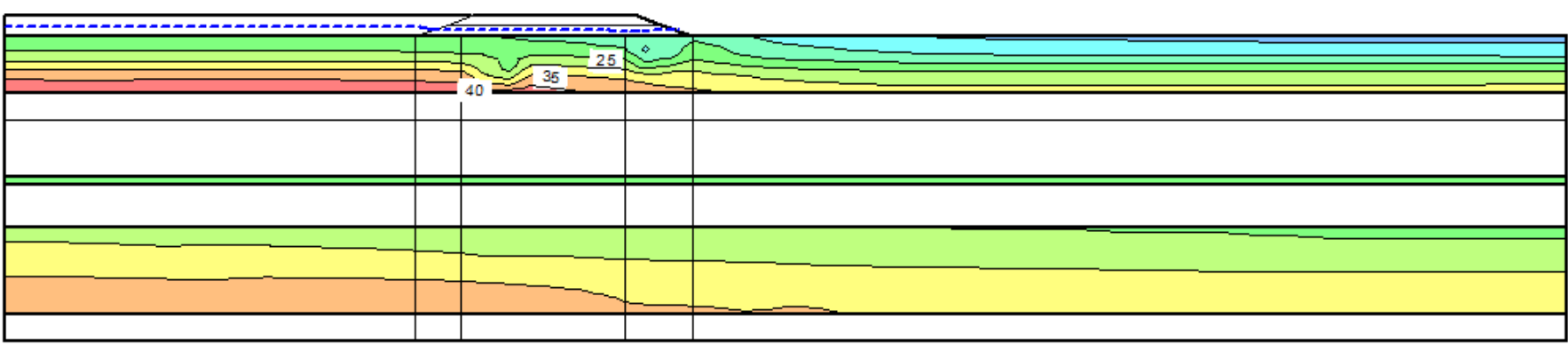
FE with PVD and vacuum — consolidation, displacement, and stress

Review purpose
  • Evaluate consolidation progress under staged vacuum loading, drain spacing, and concurrent embankment conditions
  • Predict displacement and stress to assess effects on adjacent ground and structures
Key findings
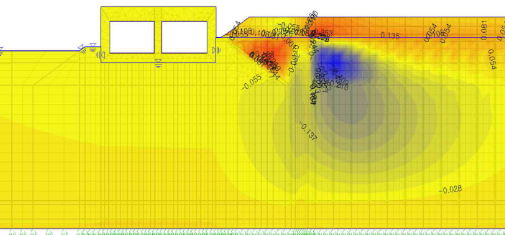
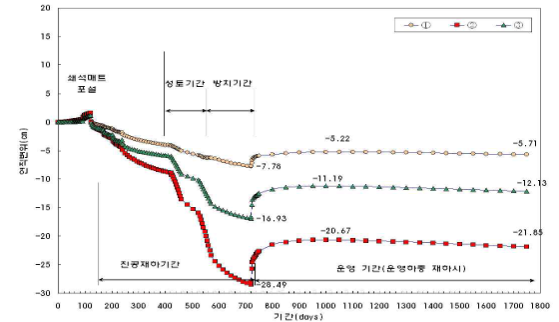
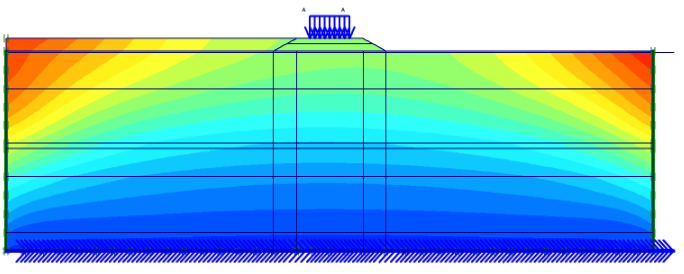
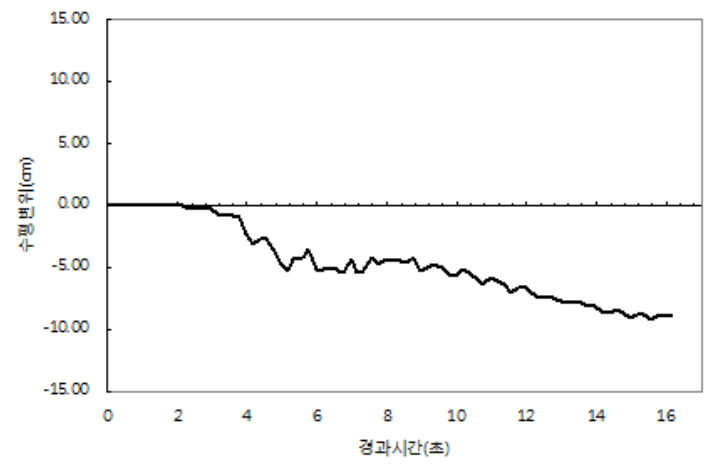
  • Confirm inward horizontal displacement and accumulated consolidation settlement under vacuum loading
  • Confirm residual settlement and the overconsolidated state after vacuum removal
  • Review strength increase resulting from increased effective stress
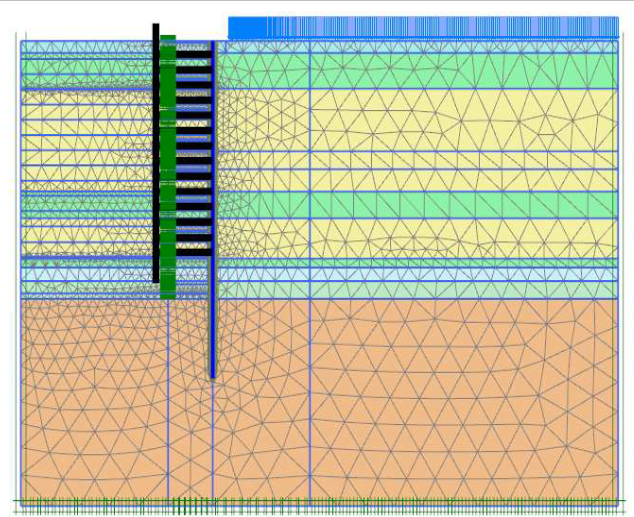
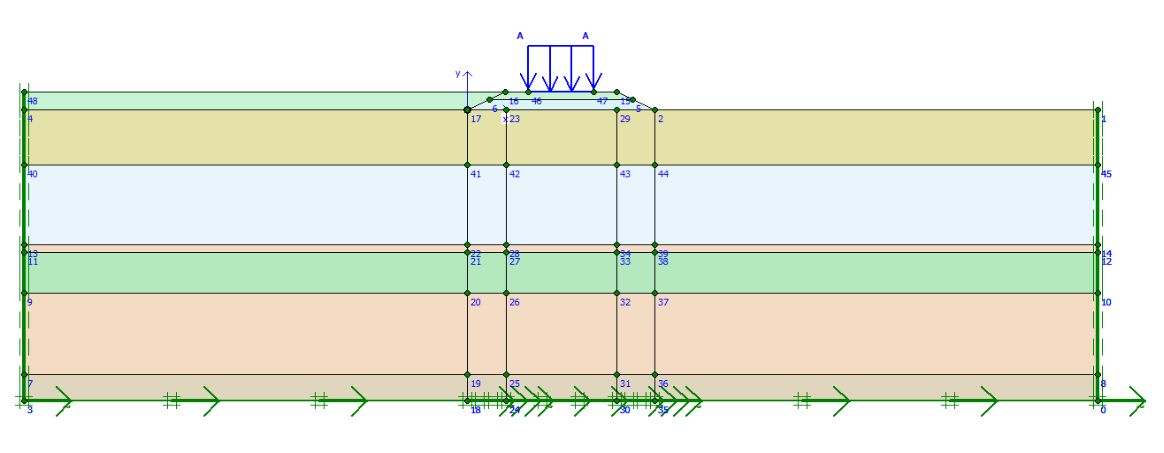
FE modeling — layers, PVD, constraints
Modeling

Temporary works stability

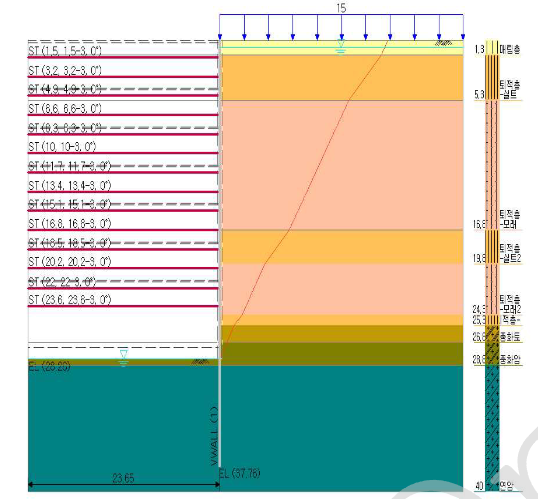
Stress–pore-pressure coupled analysis for excavation stability

Review purpose
  • Develop a rational structural design based on design criteria, site-condition surveys, and geotechnical investigation results
  • Evaluate stability through coupled stress–pore-water-pressure analysis considering groundwater flow
Key findings
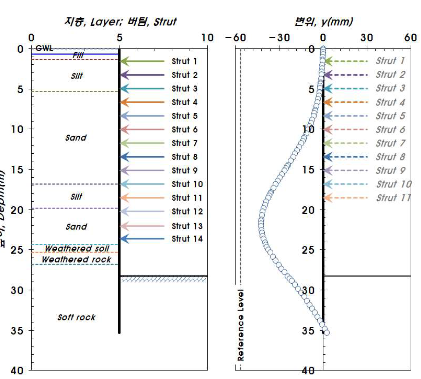
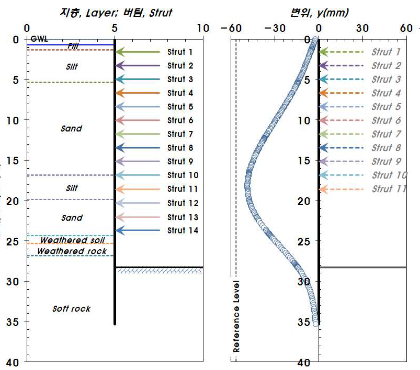
  • Identify horizontal ground displacement and the ground stress state
  • Check wall stresses, strut and temporary-anchor axial forces, and compliance with allowable displacement criteria

SSI seismic analysis

SSI with dynamic soil parameters and stiffness matrix

Review purpose
  • Evaluate a stiffness matrix based on dynamic soil parameters
  • Improve seismic-analysis reliability by comparing results with conventional analyses, including fixed-head foundation assumptions
Review sections
  • Foundation section — review displacement distribution, including equal-displacement contours
  • Temporary works section — review equal-displacement contours and displacement time histories
Key findings
  • Check whether maximum horizontal displacement satisfies the allowable criterion

3D-MODFLOW groundwater impact

Aquifer, water-level, and flow impact from excavation

Review purpose
  • Predict groundwater changes in adjacent aquifers caused by excavation such as underpasses
  • After steady-state simulation and calibration, predict water-level changes and flow rates over the construction period
Modeling and influence range
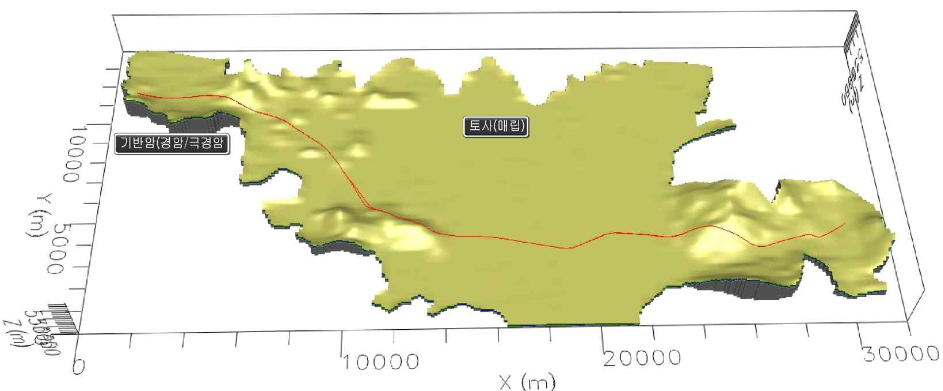
  • 3D-MODFLOW modeling
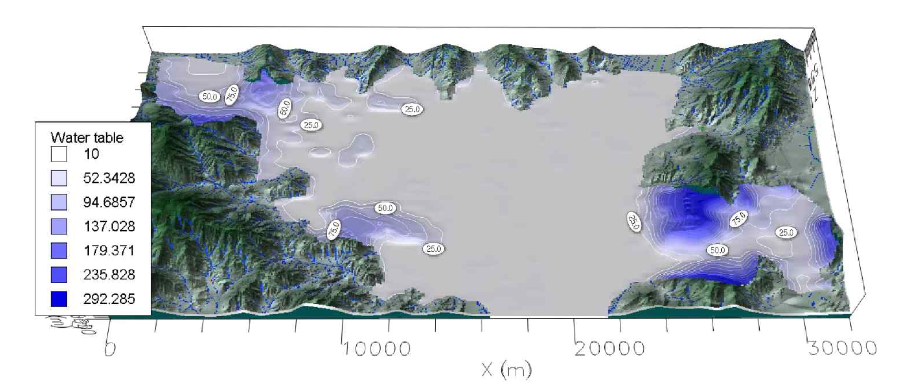
  • Groundwater-level influence range during construction for non-cutoff and cutoff conditions
  • Steady-state groundwater-surface distribution
Key findings
  • Predict expected groundwater drawdown for cutoff and non-cutoff excavation → review the need for a cutoff method
  • Review groundwater inflow caused by excavation